

Citing a 25% higher rate of cancer in his community compared to the rest of Alberta, Chief Billy-Joe Tuccaro of the Mikisew Cree First Nation (MCFN) is suing both the provincial and federal governments, alleging that decades of industrial development, and a failure to manage cumulative health impacts have violated the Nation's Treaty 8 rights.
Tuccaro said in a release that his people have depended on the region's lands and waters for hunting, fishing, trapping, and cultural practices for generations, but those practices are being impacted as wildlife declines, waters are polluted, and access to their traditional territory is disrupted, Indigenous media organization APTN reports.
"Our people are downstream from one of the largest industrial developments on Earth, and we are paying the price with our health, our lands, and our way of life," Tuccaro said.
Located in northeastern Alberta within the Peace-Athabasca Delta and Wood Buffalo National Park, MCFN is a signatory to Treaty 8 and has more than 3,000 members living in Fort Chipewyan and Fort McMurray, Alberta, and Fort Smith, Northwest Territories.
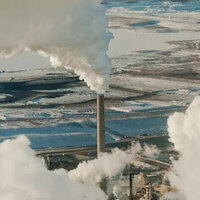
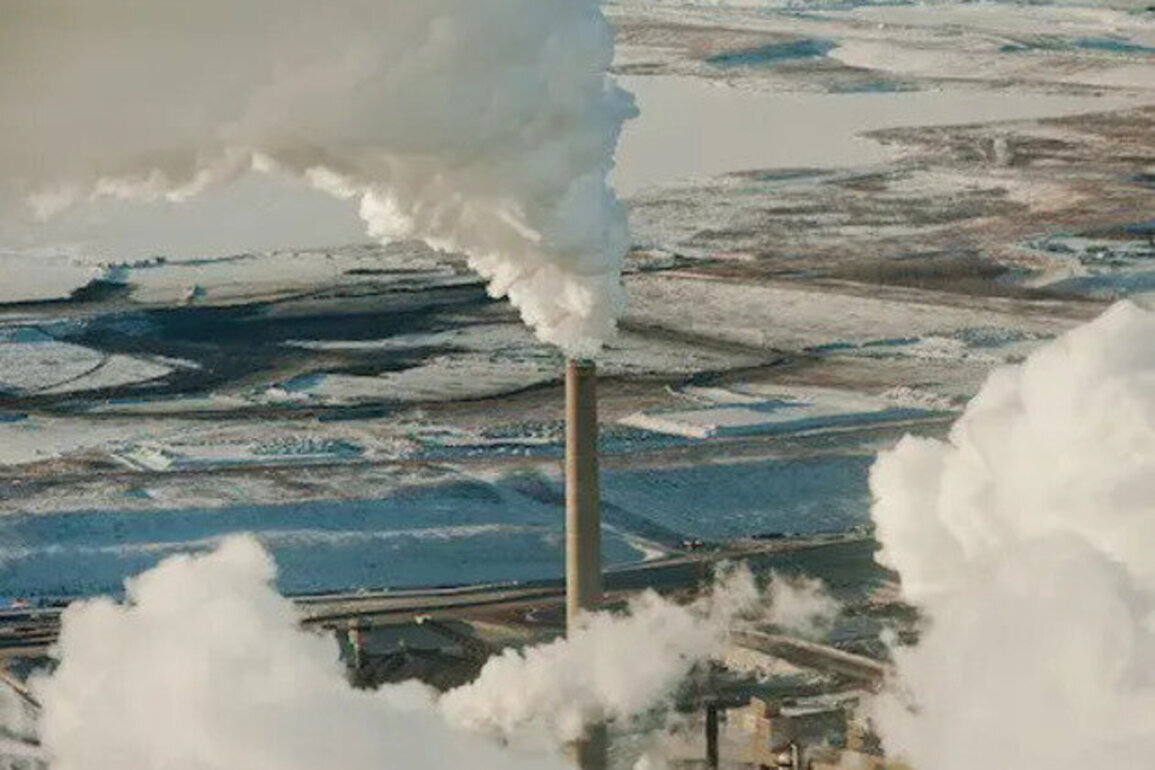
Most of its members live in Fort Chipewyan, about 750 kilometres north of Edmonton and 250 kilometres north of the Athabasca oil sands, where Canada's five largest oil sands companies extract about 3.5 million barrels of crude oil per day.
Tuccaro said preliminary findings from a new health study undertaken by the First Nation suggest cancer has affected six out of every 10 Mikisew Cree households, "significantly higher than provincial averages."
The report found 149 cancer cases in Fort Chipewyan from 1993 to 2022, he said. But the community believes the true number is higher because it does not include people who left to get treatment.
Alberta Primary and Preventative Health Services Minister Adriana LaGrange told the legislature last month that she hadn't yet seen the study, CBC News reports. The MCFN said it would be providing the documentation as evidence in its court case.
LaGrange said the province has also been monitoring cancer rates in Fort Chipewyan but hasn't seen an increase.
Investigative journalist Brandi Morin talked to some of the cancer victims. She also spoke with the company the Mikisew Cree hired to gather the data and discovered that community members who left to get treatment dropped off the government's radar that tracks them by postal code.
In an interview with former NDP Member of Parliament turned advocacy journalist Charlie Angus, Morin said the government was denying there were any reported cases of childhood cancer, contrary to her findings.
"I can tell you that's not true because I just actually interviewed a family last night whose daughter was diagnosed with cancer and was taken out of Fort Chipewyan and given treatment," she said. "There's more than one case, but this is how they're able to skirt around what's actually going on in the community."
This is not the first time the First Nation has raised the alarm about health issues. More than a decade ago, scientists from the universities of Manitoba and Saskatchewan found a cancer rate of 21.3% among Mikisew Cree members who took part in their research. Despite the scientists' call for a comprehensive, long-term health study, none was ever conducted.
The Canadian Medical Association Journal reported the study's conclusion: that human exposure to the oil sands is under-researched, contamination from the industry could have potentially widespread harm, more rigorous health studies should be done, and oil sands activities that could worsen the problem should be suspended.
Now, the Mikisew Cree chief is suing Alberta and Canada, saying they have "failed to uphold their constitutional, fiduciary, and Treaty obligations" by allowing industry development without "adequately managing cumulative environmental and health impacts."
Besides asking the court to declare that Alberta and Canada have breached Treaty 8 and infringed on Mikisew Cree's Treaty rights, Tuccaro is seeking "enforceable mechanisms and thresholds to manage cumulative impacts, including "sufficient funding to address adverse impacts," APTN reports.
Ottawa and Alberta signed off on an agreement last month giving the province more control over environmental impact assessments, which usually include studies on cumulative impacts. One legal expert called the consultation process to reach the final agreement "a complete farce."
MCFN wrote in its submission opposing the agreement that the federal government "cannot rely on Alberta's regulatory and consultation regime, nor delegate its Treaty obligations to Alberta." There was almost universal opposition from the Alberta Indigenous groups who provided input.
"Alberta's regulators have lost the confidence of First Nations and the public," MCFN wrote.
Source: The Energy Mix