

A 1.4-gigawatt, gas-powered artificial intelligence (AI) data centre proposed for Olds, Alberta will bypass a formal environmental impact assessment (EIA), even as officials confess data centres are a new and unfamiliar sector.
"I'm a bit of an old dog, so I don't know what this AI stuff is really all about. I just want to go and play hockey," Darren Bourget, an Alberta Environment and Protected Areas (AEPA) regulatory assurance manager, said on a video livestreamed at an Olds Town Council meeting on March 23.
"We're having these face-to-face meetings and really trying to understand all of the nuances associated with this particular sector, making sure that we're able to do this right, that we're answering all of the questions, and that we're making a sound, informed decision."
Earlier in March, AEPA Acting Approvals Program Manager Karen Tomashavsky had decided the Synapse project did not require an EIA.
Her decision was "based on the current information about the project," she wrote [pdf] in a March 3 letter to Synapse CEO Jason van Gaal, adding she might yet review her decision "should different and/or new information come to light."
The C$10-billion data centre, located on 300 acres within town boundaries, would run on a large gas-powered plant with 10 17-metre flare stacks. It would be the largest facility of its kind in Canada.
Bourget told council the decision to skip the EIA was made separately from his team, which has been interacting with the company on a weekly basis and working closely with the provincial power plant regulator, the Alberta Utilities Commission (AUC).
Bourget said under Alberta's Environmental Protection and Enhancement Act, some activities are exempted from having to go through an environmental impact assessment.
"This falls into that discretionary bucket because we view this project as a natural gas-fired power plant," he said, adding that the province has been regulating similar gas plants for many years and the technology is standard across projects. The waiver of the EIA requirement is not the same as an approval from the environmental regulator, Bourget said.
"We won't render a statutory decision until the AUC has signed off on it," he explained. The AEPA's role is "to ensure that proposed projects that could affect the environment in an adverse way are reviewed and that those effects are mitigated."
By then, the AUC had already rejected Synapse's power plant application over insufficient environmental studies and consultation, inviting van Gaal to reapply at a later date.
In an email to The Energy Mix, van Gaal said Synapse completed "an environmental evaluation in accordance with AUC Rule 007, which includes a detailed assessment of terrain, soils, surface water, groundwater, wetlands, vegetation, and wildlife."
He said the company also prepared an environmental protection plan with "ecological safeguards and operational commitments throughout the project's life cycle," as well as "optimizing the project footprint to minimize land disturbance and fragmentation."
The rural municipality has made a number of changes to its land use rules to accommodate the company's plans for the two-million-square-foot project, rezoning the land to "light industrial" and adding data centres to the allowable uses for the land.
Other municipalities, including Edmonton, treat power plants as "heavy industrial" in their land use bylaws.
Bourget told Olds council and members of the public who had packed the small seating area that his department has a "good handle on this," adding the sector "does seem to be growing and is prevalent, and I can't get away from it and I don't think any of the rest of us can, either."
Residents in the mostly agricultural community in central Alberta are grappling with the prospect of several new data centres in the area, and became aware of the Synapse project in late January. By mid-February, they had organized a group called the Olds Transparency Project to demand more information about Synapse which, by the had filed its first application with the AUC.
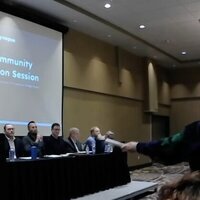
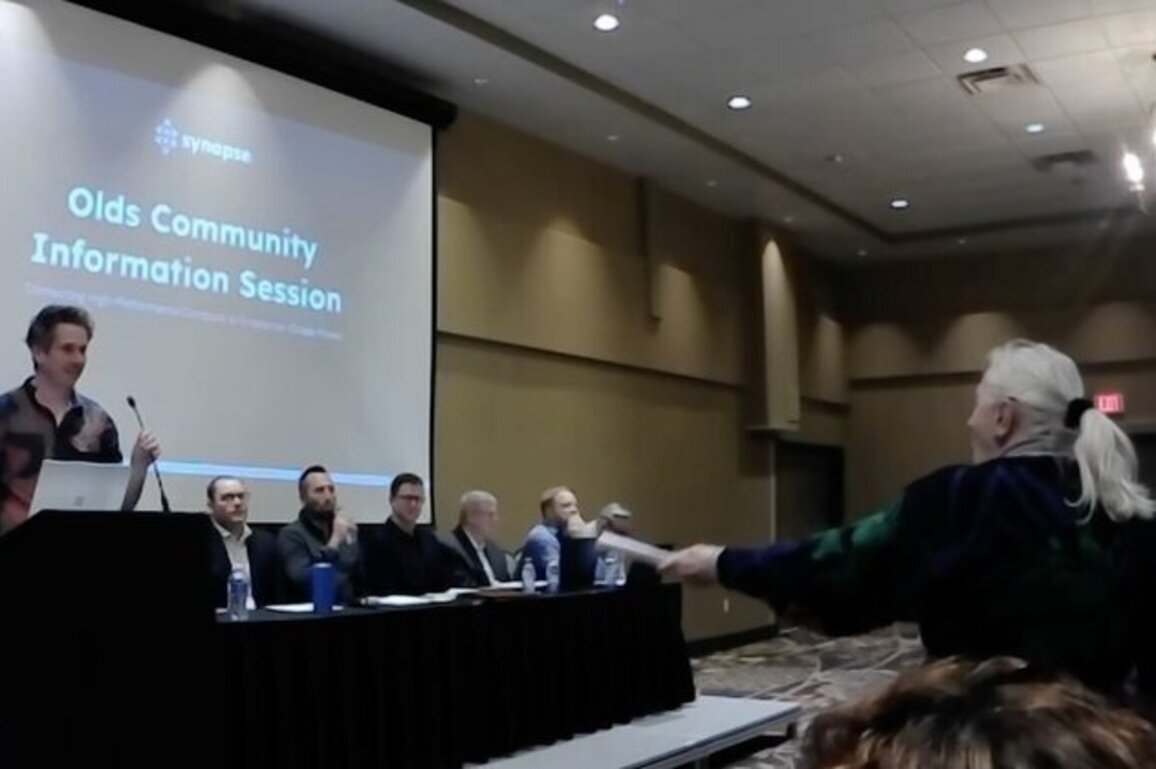
The company organized a community meeting about the project on April 1, but according to local residents, most people had only 24 hours' notice that it was taking place.
Rebecca MacIntosh lives about 300 metres from the site of the data centre, so close she said she would have to look at it when making her morning coffee. She moved to Alberta from Ontario about four years ago with her family of five. She said they chose Olds for its small town charm and hoped to enjoy some "peace and quiet."
But that all changed when she found out about the Synapse proposal.
"For two full weeks, I woke up every day being like, is this real? This can't be real. You know, where your brain is trying so hard to adjust to a completely new paradigm," she said.
Since then, she said, the whole process has taken a toll on the community.
"We're being forced to all face and deal with this, because nobody in our government or in our municipality or township is going to stand up on our behalf."
Less than a month after the AUC's closure of his first application, van Gaal filed a new one.
About 17 individuals and groups have formally registered their intent to participate in the new hearing process, including Eric Carlson, who lives about 600 metres from the Synapse site with his family of five.
"I'm looking forward to the AUC process and have complete faith in them as a regulatory body to thoroughly analyze the permit applications," he wrote in an email to The Mix.
But Carlson said the public consultation for the project had been insufficient: "It didn't seem like the developer took it seriously in the least."
Van Gaal told The Mix in an email that "Synapse remains steadfast in our commitment to transparent, respectful, and thorough consultation."
"We recognize that industrial development requires a foundation of trust," he wrote. "Our leadership has taken a hands-on approach to ensure Olds residents' concerns are heard."
Synapse received notice from Alberta's Aboriginal Consultation Office in February that no Indigenous consultation was required, but van Gaal said the company had phoned or emailed five Indigenous groups.
He said Synapse has completed 700+ individual consultations, with the leadership team meeting more than 200 individuals to understand local perspectives.
Source: The Energy Mix